| The secular high priest of SXSW Mar 9th 2013, 13:49 By Josh Rubin, CNN
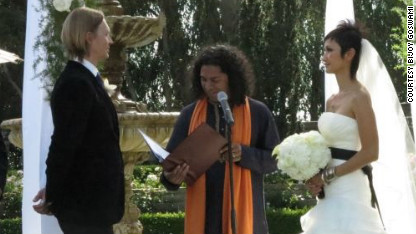
Follow @cnnexpress Austin, Texas (CNN)– As the Catholic world focuses on Rome and awaits a new pope, the secular world has turned its attention to Austin, Texas, for the annual pilgrimage of tech and music. This weekend marks the start of the 20th annual South by Southwest Interactive Festival, an event with the goal of "fostering creative and professional growth." For five days, some of the world's brightest minds will commune, collaborate and experiment. With its live music, free-flowing alcohol, and hook-up culture, SXSW has developed a reputation as being a spring break for nerds. There's even an app by Qpid.me that lets attendees share medical records to prove their STD-free status. But there is more to it than pure bacchanalia. For Bijoy Goswami, this is a high holiday with as much virtue as vice. He sees SXSW as a secular celebration where people join together to take the tools of technology and transform them into world-shaking culture. It's no accident that Twitter was released at SXSW. Follow the CNN Belief Blog on Twitter At 39-years-old, Goswami is the quintessential Austenite with long hair, a casual style and a computer science degree. He has made a home and built a career around the Austin ethos. He's introspective, relaxed, hip and weird - in a good way. Goswami describes Austin as a place of becoming: "I'm trying to figure out what to do in my various aspects of my life - spiritual, work, relational - things like that. Austin gave me the communities to work through those questions for myself," he says. Moving to Austin from Silicon Valley in the mid-'90s, Goswami started a software company before finding what he says is his true calling. Taking what he learned during his own self-discovery, he now makes his living helping other entrepreneurs find their own path. Successful startups are often built by people who know who they are and what they want, said Goswami who tries to provide a platform for people to find those answers for themselves. It's that message of personal exploration and responsibility that local leaders like Heather McKissick find so appealing. "If there is a secular guru, it's Bijoy. His message is one of self-enlightenment through the hard work of bootstrapping and chopping wood." Through years of friendship, SXSW panels, and her work as president of the Austin Leadership council, McKissick has experienced all sides of a man she calls a brilliant secular humanist. "He has his disciples, but there is also a trusted inner circle that sees past the charisma and understands him as a brilliant, articulate and equally flawed human as the rest of us." Born in India to a Hindu father and Catholic mother, Goswami was a child of both Eastern and Western philosophy. "I always had exposure to Hinduism, Islam, and Buddhism. They were all in the water and air I was breathing. " Goswami's mother, however, wanted her children to be raised Catholic. "My dad said, 'Fine.' So all the way through 18, Catholicism worked for me. I didn't question it - I just liked it." CNN Belief: Atheists ratchet up rhetoric, use billboards to attack Republican politicians His father's career moved the family from India to Taiwan and then to Hong Kong. Goswami's mother began teaching at the American Hong Kong International School, allowing him and his brothers to attend for free. Goswami's life in Hong Kong was a happy one - at home, school, and in church. "I was an altar boy. I had no problems with priests. I read the Gospels. I was a student of the Bible. I believed I had a personal relationship with God … all of that stuff. " But long before Pope Benedict resigned, Goswami had already fired him. While attending Stanford University, Goswami began studying the history of the Catholic Church, and long held beliefs began to erode. "My mind's getting blown. Every single thing that I believed, like the sacraments, were just invented by various popes and people." Like many, after leaving home for college, Goswami had a crisis of faith. By the end of his sophomore year, he came to a realization "that not only were Christianity and Catholicism invented by people … but so was every other religion. Take the Catholic Church - it's caught up in old conversations that aren't relevant. They're still fighting the battles of 50 years ago within themselves rather then helping people on their journey or path." For Goswami, not being a Catholic meant more than shrugging off the teachings of the church. It meant fundamentally changing his relationship with his mother. "That was a really hard moment for my mom and me. I went back to Hong Kong for summer break and I said, 'Hey Mom, I'm not going to go to church with you.' " The beginning of Goswami's story isn't unique, but that didn't make his religious disillusionment any easier. It hurt him to hurt his mother. "I was her blue-eyed altar boy who had done no wrong, who she thought would be a priest … and I am a priest, just differently," he says. As a secular priest of sorts, Goswami has officiated weddings and provided council for hundreds in the Austin startup community. He received his ordination online through the popular Universal Life Church, which according to its website ordains, "ministers, priests, rabbis and clergy worldwide who are totally non-religious or even anti-religious."  Bijoy Goswami preforms the wedding of Bruce Krysiak and Gigi De Leon in April 2012. One such person counseled by Goswami is Josh Baer, manager of Austin's Capital Factory incubator. Goswami was a crucial part of his development as an entrepreneur. Goswami "has this Zen quality and personal confidence that makes people feel comfortable sharing their dreams and aspirations," Baer says. "He guides others on their path." To Baer and hundreds like him, Goswami is like a high priest for Austin's entrepreneurs, a role he built over the years by leaning on the lessons of the faith he left. He created a congregation of like-minded entrepreneurs by founding bootstrap Austin, an informal group of founders coming together to share experiences. His message is that just because you're going it alone doesn't mean you have to be alone, and it permeates the Austin start-up scene. CNN's Belief Blog: The faith angles behind the biggest stories That deep understanding of the importance of community is one of the reasons he isn't bitter towards Catholicism. "I'm grateful to religion. In the march of history, it has served a very important purpose," he says, pausing and smiling slightly. "Now we start to take that back." Participating in the 10-day SXSW festival is part of what Goswami calls his self-curation. It's one of the ways he has found meaning without God. "We've recreated those structures, we need celebration, we need community, we need conversation about meaning and identity, all those things we need," he says. For Goswami, religion is of his past, and now it's time for him to move on.   |  | 2013 Cadillac V-Series Challenge for Charity Mar 9th 2013, 01:33 | In advance of the World Golf Championships-Cadillac Championship, some of the best players in the world visited Homestead-Miami Speedway to participate in th... | Views: 360 5 ratings | | Time: 02:56 | More in Sports |
| | Obama pushes expedited timetable on immigration reform in meeting with faith leaders Mar 8th 2013, 20:22 By Dan Merica, CNN
Follow @DanMericaCNN Washington (CNN) – President Barack Obama emphasized the need to get immigration reform accomplished this year in a meeting with a diverse group of faith leaders at the White House on Friday. Religious leaders that attended the meeting said the president spent more than an hour with them, and after making a few remarks at the top of the meeting he let each group discuss their priorities and problems with comprehensive immigration reform. During the discussion, these faith leaders said, Obama made it clear that he wanted to see a bill on immigration reform in the next 60 days. "I really sensed that this is a high priority for him," Jim Wallis, president of Sojourners, a Christian social justice group, told CNN. "We are all looking at something being introduced this month and then the bill passing in May or June. We are all hoping that kind of time frame could work." Since winning reelection in 2012, the Obama administration has made it clear that immigration reform is a top priority for the president's second term – and something they want to see quick action on. According to people who attended the meeting, in attendance, the president reiterated that support and laid out a timetable for the religious leaders. Wallis, who has spearheaded a group of evangelical leaders on immigration reform, said that Obama particularly mentioned the importance of faith leaders in the immigration debate. "He said that while every issue has politics, but on this question, it really was am moral issue to him and he sees the faith community as lifting that up," Wallis said. "He was really fervent about the role of faith in this debate." "This was the broadest, most well-rounded group of folks that I have ever met with on this issue," said Stephan Bauman, the president of World Relief. "And pretty much everyone in the room had a chance to share their opinion on the issue." In addition to Wallis and Bauman, both evangelical leaders, representatives from the Jewish, Muslim, Mormon and Catholic faiths were in attendance. Bauman and Wallis said this was not only a religiously diverse group, but also politically diverse. The Christian leaders said that politically, the group represented both liberal and conservative political traditions. "This was not a bunch of left-leaning religious groups," Wallis said. A source who attended the meeting provided the full list of attendees to CNN: Leith Anderson, National Association of Evangelicals
Stephan Bauman, President and CEO, World Relief
Bishop Minerva Carcaño, United Methodist Church
Rev. Luis Cortés, President, Esperanza
Barrett Duke, Southern Baptist Convention
Bishop Orlando Findlayter, Senior Pastor, New Hope Christian Fellowship
Archbishop José Horacio Gomez, Archdiocese of Los Angeles
Mark Hetfield, President and CEO, Hebrew Immigrant Aid Society
Rev. Kathryn Lohre, National Council of Churches
Imam Mohamed Magid, President, Islamic Society of North America
Rev. Samuel Rodriguez, President, National Hispanic Christian Leadership Conference
Rev. Gabriel Salguero, President, National Latino Evangelical Coalition
Dieter Uchtdorf, Second Counselor, Church of Jesus Christ of Latter Day Saints
Jim Wallis, President and CEO, Sojourners
Cecilia Muñoz, Assistant to the President and Director of the Domestic Policy Council In a statement about the meeting, the White House thanked the religious leaders for their attendance and said the group talked about how they could work to "swiftly pass... a commonsense immigration reform bill." "The President and the leaders discussed the pillars the President has put forward for reform, including that any bill must include a pathway to earned citizenship, as well as measures to crack down on employers who game the system and exploit both American and immigrant workers, continuing to strengthen our border security, and strengthening the legal immigration system for families, employers, and workers," the statement said. At the end of the meeting, the group offered a prayer, according to the White House. Some faith leaders have long called for comprehensive immigration reform, but demand for reform has increased in the last few months. "I think we have a window of opportunity in these first months of 2013," Richard Land, president of the Ethics and Religious Liberty Commission, told CNN in January. "I think there is a real, new conversation on immigration reform." That window, Land acknowledged, is small and could close at any point. Congress has a number of issues to deal with in the coming year; Republican members of Congress hope to focus on government spending and the debt, while the White House is likely to push for gun control early in the president's second term. "I am hopeful that Congress can walk and chew gum and the same time," Land said. "I am hopeful they can deal with more than one issue at the same time." In January, Land and a large group of other evangelical leaders took a big step towards pushing immigration reform by launching Evangelical Immigration Table, a group dedicated to making immigration reform a reality in 2013. The group released an open letter to Congress and the White House. In it, they pressed Congress to respect "the God-given dignity of every person" and establish a "path toward legal status and/or citizenship for those who qualify and wish to become permanent residents." In addition to meeting with Obama, Wallis tells CNN that over the last few months, the group has met with both Democratic and Republican leadership in the House and Senate, "from Chuck Schumer to Lindsey Graham."   | | Vatican: Conclave to start Tuesday Mar 8th 2013, 16:44 Rome (CNN) - The Catholic cardinals gathered in Rome voted Friday to begin the secret election, or conclave, to elect a new pope next Tuesday afternoon, the Vatican said. The 115 cardinal-electors taking part in the conclave will enter the closed-door process after a morning Mass, the Vatican said. Only those younger than 80 are eligible to vote. The cardinals voted Friday morning to accept the letters of explanation of two cardinal-electors who are eligible to vote for the next pope but will not attend the conclave: Keith O'Brien of Scotland and Julius Riyadi Darmaatmadja of Indonesia. Darmaatmadja cited health reasons, and O'Brien cited personal reasons. O'Brien resigned in scandal last week after allegations that he made sexual advances toward young men studying to be priests. He apologized in a statement Sunday, saying, "There have been times that my sexual conduct has fallen below the standards expected of me as a priest, archbishop and cardinal." Since Monday, the cardinals have been uniting for what are known as General Congregations, a series of meetings in which they discuss the issues facing the church. These include how to tackle the issue of child sex abuse by priests and a scandal over leaks from the Vatican last year that revealed claims of corruption within the Roman Catholic Church hierarchy. Read the full story   | | My Take: The pope is irrelevant Mar 7th 2013, 14:03  Editor's note: Stephen Prothero, a Boston University religion scholar and author of "The American Bible: How Our Words Unite, Divide, and Define a Nation," is a regular CNN Belief Blog contributor. Editor's note: Stephen Prothero, a Boston University religion scholar and author of "The American Bible: How Our Words Unite, Divide, and Define a Nation," is a regular CNN Belief Blog contributor.
By Stephen Prothero, Special to CNN (CNN) - Earlier this week I was sitting in my office with a Catholic student discussing the upcoming election of the new pope. "It's irrelevant," she told me, adding that none of her Catholic friends care who the next pope will be, nor should they. For much of American history, the pope was anything but irrelevant. Throughout the 19th century, Protestants feared him, concerned he and his minions were plotting to take over the United States from afar and replace our Constitution with their canon law. As late as the 1960 presidential election, John F. Kennedy felt it necessary to promise (in his now famous Houston speech) that if elected president, he wouldn't be taking orders from the Great and Powerful Vatican. Today the gap between the "official" Catholicism of Rome and the "unofficial" Catholicism of communicants in Cincinnati and Des Moines is wide and growing. If you ever find yourself offering an introductory lecture on Roman Catholicism you might find yourself saying things like "Catholics believe the pope can speak infallibly" or "Catholics require their priests to be unmarried men" or "Catholics reject artificial birth control." Yet in a New York Times/CBS News poll released this week, nearly four out of every five U.S. Catholic respondents say they favor artificial methods of birth control. Nearly two-thirds say they favor letting Catholic priests marry, and another two-thirds say they favor women's ordination. Moreover, American Catholics today are more likely to say the pope is "not infallible" (46%) than they are to say that he is (40%). And so it goes in this survey on questions such as abortion, the death penalty and same-sex marriage, where a majority of rank-and-file U.S. Catholics disagree with the Catholic hierarchy. When I point out this yawning gap to my non-Catholic students, many conclude either that those who do not follow their church's teachings are bad Catholics or that they somehow aren't Catholics at all. Yet Catholics in overwhelming numbers repeatedly say that it is possible to disagree with the pope on birth control, abortion, capital punishment and divorce and still be a good Catholic. What is going on here? One answer is that the U.S. Catholic Church is going to hell. From the perspective of Catholic conservatives in Asia and Africa and the Vatican itself, American Catholic churches harbor far too many "cafeteria Catholics" who follow the teachings of their church only when those teachings agree with their tastes, But from the perspective of many of these "a la carte Catholics" (as the French sociologist Danièle Hervieu-Leger calls them), the people are the church. As they see it, the conclave of the cardinals in Rome is a sideshow. The real drama takes place every week in Catholic Mass across the world, or in the equally mysterious depths of individual Catholic consciences. In the most revealing question in this new poll, respondents were asked whether they are more likely to follow the pope's teachings or the stirrings of their own conscience when it comes to "difficult moral questions." Of them, 78% said conscience; only 13 percent said the pope. Of course, these two voices do not have to clash. And they would harmonize more closely if the Church had done a better job over the last generation shaping the consciences of its flock. Unfortunately, it has far too often set those consciences on edge, by harboring priests who sexually abused young Catholics and then by siding far too often with the abusers rather than the abused. I don't always agree with the official Church in Rome on social questions. But in the past I have been grateful that our world includes an ancient institution that can challenge with a prophetic "no" whatever wisdom Hollywood or Washington might be channeling in any given moment. Unfortunately, that moral voice is muffled now to the point of silence. I'm sure my student would echo the preference of the Catholic respondents in this poll for a pope who is more liberal, and for a Church that isn't so "out of touch." But global trends in Roman Catholicism offer little reason for such a pope. Theologically, the cardinals are a conservative lot, deeply committed to the notion that the Church is its leaders and that the other 99% of the Catholic world should get in line and follow. In the United States, at least, that is a recipe for yet another irrelevant pope.
The opinions expressed here are solely those of Stephen Prothero   | | Electing a pope: What's taking so long? Mar 6th 2013, 18:18 By Richard Allen Greene, CNN Rome (CNN) – In and around the Vatican these days, there's one question everyone keeps asking: When is the conclave to elect the new pope going to start? The cardinals of the Roman Catholic Church aren't saying, but they're sending a clear message: They will not be rushed. As of the seventh day after Pope Benedict XVI flew off into the sunset, the voting cardinals hadn't even all arrived in Rome, leaving the world wondering what's taking so long. But don't be fooled. The conclave matters, but it isn't the only game in town. What's happening now is at least as important. Since Monday, the princes of the church have been meeting in what are called General Congregations - closed-door discussion sessions where all of the world's cardinals can talk about whatever is on their mind. Follow the CNN Belief Blog on Twitter Think of it like this: If the conclave is the presidential election, the General Congregations happening now are the primaries - or the caucuses held every four years in Iowa, where friends, neighbors and coworkers meet and discuss why they think their candidate would make the best president. The conversations won't be that nakedly political, but everyone in the room is sizing up everyone else as they discuss the issues facing the church. Some of that happens over coffee breaks, as one Vatican spokesman hinted on Monday, the first day of the General Congregations. "There's a coffee break for about 30 minutes at a special buffet area in the front part of the audience hall," said the Rev. Thomas Rosica. "Cardinals have an opportunity to go down and mix and mingle." The cardinals aged 80 and over, who are barred by Church law from voting for the next pope, do get to participate in the General Congregations. It's their only chance to set the agenda. "They want to say what the next pope will hear, because he's probably in that room, and they also want to alert the people who haven't spent so much time in Rome just what the situation really is here as they see it," Cardinal Francis George of Chicago said. Cardinal Jose Saraiva Martins, who participated in the conclave to elect Benedict XVI but is too old for this conclave, said the groundwork is laid during General Congregations. "By the time the congregations are over, you have a clear idea of who can deal with the problems we've discussed," he said on Sunday. The cardinals under the age of 80 who elect the pope continue evaluating each other once the conclave begins, Cardinal George said. "You take people aside and say 'Now, in the balloting today, so-and-so had support and I wasn't even very much aware who he is. Tell me about him," he told CNN before the General Congregations started. A look at possible papal contenders But they want to go into the conclave with pretty clear ideas about who should be pope, Cardinal Sean O'Malley said at a news conference Tuesday. "We want to have enough time in the General Congregations so that when we go into the conclave it's a time of decision," the Boston cardinal said. "This is a time of discernment and prayer and reflections," he said, referring to the General Congregations. "Many cardinals are concerned that if there is not enough time spent in the General Congregations then when we get into the conclave it could drag on," he said. "If you cut short the discussions, the conclave could go on and on and we really prefer to have the discussions done before," he said. CNN's Belief Blog: The faith angles behind the biggest stories And how long will the discussions take? Cardinal Daniel DiNardo of Galveston-Houston, Texas, answered that at the same news conference on Tuesday: "It takes as long as it takes."   | | Priest abuse victims' group blacklists 12 cardinals for pope Mar 6th 2013, 16:56 By Richard Allen Greene, Laura Smith-Spark and Hada Messia, CNN Rome (CNN) - A group representing survivors of sexual abuse by priests named a "Dirty Dozen" list of cardinals it said would be the worst candidates for pope based on their handling of child sex abuse claims. Their presence on the list is based "on their actions and/or public comment about child sex abuse and cover up in the church," the group said. The list includes Roman Catholic cardinals from several countries. SNAP, the Survivors' Network of those Abused by Priests, said as it released the list Wednesday that its accusations were based on media reports, legal filings and victims' statements. The cardinals named on the list have not yet responded to the move by SNAP. But when asked about it by CNN, the Rev. Federico Lombardi, a spokesman for the Vatican, said: "We believe it is not up to SNAP to decide who comes to conclave and who is chosen ... cardinals can decide themselves without asking SNAP for advice."   | | My Take: What the next pope will face Mar 6th 2013, 12:14  Editor's note: Cardinal Theodore McCarrick is the Archbishop Emeritus of Washington, D.C. He participated in the 2005 election of Pope Benedict XVI. Watch Cardinal McCarrick on The Situation Room today at 6 p.m. ET. Editor's note: Cardinal Theodore McCarrick is the Archbishop Emeritus of Washington, D.C. He participated in the 2005 election of Pope Benedict XVI. Watch Cardinal McCarrick on The Situation Room today at 6 p.m. ET.
By Theodore Edgar McCarrick, Special to CNN (CNN) - The world is waiting on the next pope in more ways than one. Everyone, including the College of Cardinals, is wondering who the next Bishop of Rome and leader of the world's billion Catholics will be. But the world is waiting in another, more urgent sense, because the pope isn't just a spiritual leader to Catholics. His work has a global dimension. As has been true in the past, the next pope will have to provide a moral voice to a range of challenges. An estimated 1.7 billion people live without adequate health care or decent living conditions and more than 1.3 billion live below the measure of extreme poverty. Some 870 million people are chronically malnourished. Jesus identified himself with the poor and the marginalized and all Christians have a responsibility to them. But the pope, as Servant of the Servants of God and Vicar of Christ on Earth, bears a special burden.   | | Celibacy for priests a hot issue, just not for church leaders Mar 6th 2013, 03:36 By Peter Shadbolt, CNN (CNN)–For centuries, the Vatican has required celibacy from its priests. It is a vow the Catholic Church says not only underscores the commitment of seminarians to their vocation but also is a model of Christ's own celibacy. But with the election of a new pope, many church watchers are wondering whether church teachings could change to allow all priests to marry. Currently, the Vatican allows married Anglican priests who join the Catholic Church to become ordained as priests. Young Catholic seminarians, meanwhile, must remain celibate, and church leadership seems unlikely to move on the issue. New York Cardinal Timothy Dolan told CNN's Christiane Amanpour that while changes to church law on celibacy might be discussed, it is unlikely to change soon. "It startles me sometimes (when people) say why doesn't the church talk about married priests," he said. "I think we talk about it; I can't get my hair cut without my barber asking me about it. (But) I don't think there would be that kind of change. "For a pope, the mission statement is to conserve in the best sense of the word … preserve the spiritual patrimony of the church, the timeless teaching that's taught to us from Jesus to his apostles through 2,000 years of the Church. "Now that doesn't mean he might not change the way it's presented." Follow the CNN Belief Blog on Twitter For the Vatican, the debate on celibacy is nothing new; it has been going on in various forms since the Reformation of the 16th century – but the past 50 years has put new pressures on the priesthood. The Vatican reaffirmed its commitment to continuing the practice at the height of the social and sexual revolution of the 1960s. In 1967, Pope Paul VI, who charted the Catholic Church through the difficult shoals of the cultural upheavals of the 1960s, published an encyclical, or open letter to the church, entitled Sacerdotalis Caelibatus (Latin for "Of the celibate priesthood"). In it, he outlined the reasons for keeping the tradition of celibacy a part of church teaching: it was a superior way of achieving grace, it freed priests from familial obligations in order to devote themselves to God, it mirrored heaven as a place without marriage. "In any case, the church of the West cannot weaken her faithful observance of her own tradition," Pope Paul VI wrote at the time. Britain's most senior Roman Catholic, Cardinal Keith O'Brien, told the BBC in February that many priests struggle to cope with celibacy and should be able to marry and have a family. Just three days later he was forced to resign over allegations of a 30-year-old sex scandal with seminarians in his charge. O'Brien later admitted his conduct had "fallen below the standards" expected of a priest. "I'd be very happy if others had the opportunity of considering whether or not they could or should be married. It's a free world and I realize many priests have found it very difficult to cope with celibacy as they lived out their priesthood, and felt the need of a companion, of a woman, to whom they could get married and raise a family," he told the British news agency. O'Brien is not the first or the highest ranked Catholic to question the tradition of priestly celibacy. In 1993, at a weekly audience, even Pope John Paul II said celibacy did "not belong to the essence of the priesthood." Even so, he qualified this, saying there was "no doubt about its suitability and indeed its appropriateness to the demands of sacred orders." Celibacy in the Catholic Church is a law, not a doctrine, and can be changed by the pope at any time. Despite this, Pope Benedict XVI made it clear during his tenure that the traditional practice was unlikely to change. The Rev. Joseph Fessio, founder and editor of the U.S.-based conservative Catholic publishing house Ignatius Press, told Boston's The Good Catholic Life radio in February that while celibacy is a discipline and not a dogma, it made it no less an important part of the Catholic Church. "People say celibacy is only a discipline, but it's not only a discipline," he told the radio program. "It's something the church in its wisdom for 2000 years has recognized as a closer, more exact, more profound following of the example Jesus set us." CNN's Belief Blog: The faith angles behind the biggest stories In the meantime, the arguments against celibacy have been mounting. Opponents argue that Jesus did not require celibacy from his apostles, that sexual repression has led to the sex abuse scandals currently racking the church and that celibacy has been responsible for the dwindling numbers of young men taking up the vocation. Sister Chris Schenk of the Ohio-based Catholic reform movement Futurechurch believes that celibacy should be made optional. "Around the world there is a severe shortage of Catholic priests and over 50,000 churches have no pastor," she said. "While the number of Catholics is rising, the number of priests is in decline – mandatory celibacy can deter quality candidates from entering the priesthood. "According to the Vatican yearbook, between 1975 and 2010 the world's Catholics increased by 59% from 709.6 million to 1.96 billion, but the number of priests increased only 1.8%. "In 1975 there were 404,783 priests worldwide compared with 412,000 now. Forty-six percent of the world's priests are in Europe but only 24% of Catholics live there ... and the number is diminishing." It seems her view may be supported by a majority of American Catholics. According to a survey of American Catholics by the Pew Research Center taken after Pope Benedict announced his resignation, 58% of congregants favored allowing priests to marry. Even so, the figures showed the divisive nature of the debate: Of those who attend Mass regularly, only 46% supported marriage for priests while 66% of those who attended less regularly supported marriage. One former seminarian, who did not want to be named because he is still active in the church and not authorized to speak publicly, told CNN the vow of chastity was one of the chief reasons he dropped out of the vocation. "I had strong issues with celibacy and, at that time, wanted the freedom to get married and didn't know why there could be Lutheran pastors that led perfectly normal family lives and also ran their congregations. "I certainly understood the celibate side to priesthood and had a certain respect for it – strangely I still do – but I just felt that you should be given options." He said the diocesan college he attended in the United States – a type of minor seminary – was designed to prepare students for their commitments at major seminaries if they decided to continue their studies. "They were obviously making changes from the middle of the century – in the '30s, '40s and '50s - when the seminaries were packed full, but probably after the whole peace revolution and the sexual revolution guys obviously started having a lot of second thoughts," he said. He said he saw little evidence of the kind of sexual abuses that have recently come to light and derailed the Catholic Church. "When you're young, growing up in a big, serious Catholic family - and I went to a Catholic grade school, I was essentially raised, socialized and educated by nuns and priests - that has a very deep impact especially if they're good role models. "I never had any sleazy nuns or priests when I was growing up, at least none that I knew about," he said. "When you've got such good role models, both nuns and priests, who are celibate, that makes a big mark on you."   | | My Take: The secret thoughts of a Vatican spokesperson Mar 6th 2013, 02:37  Editor's Note: The Rev. Thomas Rosica is CEO of the Salt and Light Catholic Media Foundation in Canada and president of Assumption University in Windsor, Ontario. He is serving as English language assistant to the director of the Holy See Press Office during the papal transition. Editor's Note: The Rev. Thomas Rosica is CEO of the Salt and Light Catholic Media Foundation in Canada and president of Assumption University in Windsor, Ontario. He is serving as English language assistant to the director of the Holy See Press Office during the papal transition.
By The Rev. Thomas Rosica, C.S.B, Special to CNN
(CNN)–When my colleague and friend, the Rev. Federico Lombardi, director of the Holy See Press Office, told me to come quickly to Rome to assist him, I understood that help was needed in dealing with a deluge of media requests in the aftermath of the pope's surprise resignation announcement on February 11. Having run a World Youth Day in Canada in 2002 and then founded, set up and led Salt and Light Catholic Television Network in Canada since 2003, I knew something about media and press relations. Little did I know what would be awaiting me in the Caput Mundi when I arrived more than two weeks ago. It was not a deluge but a veritable tsunami! The most amusing questions, however, have been those that come from people who know me from back home and those who never met me until now. "How are you surviving in the midst of chaos at the Vatican, a resigned pope, intrigue among cardinals, scandals and back-room skullduggery going on inside the Vatican?" "How can you breathe amidst a church that thrives in secrecy and prevents you from speaking the truth?" I smile, because I have experienced none of the above. Rather, I have encountered an incredible interest in things church from many of the 5,000-plus journalists and media types accredited to these momentous events. Follow the CNN Belief Blog on Twitter Through more than 120 interviews I have done since arriving in Rome, and responding to hundreds of e-mails and telephone calls from every corner of the globe, and even amidst some of the most superficial or pointed questions raised publicly or privately, I realize that no matter how many mistakes we have made in the church, people still look to my faith community as a beacon of hope, a pillar of strength and bearer of goodness to our crazy world. I marvel at the creative invention of some Italian journalists who give new meaning to reality shows and make tabloid journalism look good! I am amused at bloggers who seek to have their texts substituted for what I have venerated in Matthew, Mark, Luke and John! When journalists at press briefings have been enthralled with the shoe color of a pope emeritus, or expressed intense fascination for the livelihood of a retired pope's cats (I am not sure that he has cats), or wild interest in his breakfast menu at Castel Gandolfo, or the intrigue surrounding the smashing of Pope Benedict's fisherman's ring and seal, I ask myself, "What is it about this church and her leader that excites people so much?" I will tell you how I survive in the midst of all of this tempest hovering over Vatican City. I celebrate Mass early each morning with my colleague Sebastian, either in the Jesuit Generalate where I am spending these weeks, sharing first-class Ignatian hospitality with some great members of the Society of Jesus or at a side altar in St. Peter's Basilica or in the Vatican crypt. CNN Belief: The pope in retirement - What to expect In the center of that massive church, way beneath the papal high altar, excavators found in the 1940s a shrine, the tropaion (the Greek word for trophy or victory monument): a classic structure with columns supporting what may have been an altar. At the back of the tropaion was a red wall. When archaeologists unearthed the buttressing wall, they found it covered with graffiti. One piece of graffiti seemed to say, "Peter is [here!]" [Petros eini]. These are the remains of a Galilean fisherman, which would have been among the most jealously guarded relics of the ancient Roman Christian community. Among the fragments of bones of the fisherman were found Peter's skull, vertebrae, arms, hands, pelvis and legs. But there was nothing from the ankles on down. If a man has been crucified upside down, as tradition says Peter was, the easiest way to remove what was left of his body would have been to chop off the dead man's feet and pull down the rest of the corpse from the cross. Peter, like his Lord and master, died a scandalous death. Scandal has marred this faith community from the beginning. These days as cardinals are gathered in the upper room of the new synod hall to examine the state of the church and assess successes and failures at various levels of the church, they gather around the bones of Peter, the rock upon whom this whole operation was built. And after some days of reflection, they will enter the Sistine Chapel to elect a successor to Peter. What keeps me going these days is a remembrance of Peter, a personal friend of Jesus of Nazareth, who had to remember his own failures as he undertook leadership within the church. Rather than incapacitating him, his remembrance enabled him to be a merciful and compassionate leader. Peter learned his lesson well; he would imitate Jesus the rest of his life even to the point of giving that life as a martyr, dying upside down on a cross on the Vatican hill. The last thing Peter would have seen before dying was the obelisk that now stands in the middle of St. Peter's Square. CNN's Belief Blog: The faith angles behind the biggest stories This reality we call Catholicism does not rest on some kind of pious myth, a pie-in-the sky story from long ago. It is a story that has weathered many storms, and withstood the fury of the gates of hell. It is a story about real people and real things that happened to them. People who staked their lives, and continue to do so, not on fables and fantasies, but on what they came to understand as the truth. It is that same truth that we are trying to serve these days as we tell the world an ancient, at times incredible story that continues to excite and entice the whole world. It's ultimately about Peter and the one he loved so much that he gave up everything to follow him. The opinions expressed in this commentary are solely those of Thomas Rosica.   | | Fake bishop busted and booted from Vatican Mar 5th 2013, 18:57 By Jessica Ravitz, CNN (CNN) – Move over, Tareq and Michaele Salahi, the Virginia ex-couple who famously – or infamously – crashed President Obama's first White House state dinner. There's a new impostor posing with dignitaries, and he set his sights on an even more coveted gathering. Meet Ralph Napierski, a German self-declared bishop who reportedly called himself "Basilius," said he was with the nonexistent "Italian Orthodox Church" and set out to infiltrate a Monday meeting of cardinals at the Vatican. The fake bishop donned a purple sash (really a scarf) over his vestments and mingled with cardinals and others who'd flown in from around the globe ahead of the conclave to pick a new pope. He smiled wide and posed for cameras while shaking hands with Cardinal Sergio Sebiastiana. He tried to blend in. But before he could get into Paul VI Hall for a top-secret meeting, the Telegraph reported, Napierski was nabbed and booted by Swiss Guards. Seems the disguise, which was a little off, gave him away. The cassock was too short, the crucifix around his neck a bit different, the purple scarf conspicuous against all the red. The fedora on his head, against all the skullcaps, probably didn't help. Napierski, who disputes the media reports, apparently runs several websites, including one dedicated to Jesus Yoga. In a rambling blog called Corpus Dei, which he describes as a "Catholic order after episcopal law," he writes that he is "a slave and apostle like St. Paul" and "is fighting the Heresy and false movements inside the Roman Catholic Church." He also claims to be an "internet hacker and activist" and an inventor who came up with "a system to enable persons to control computers with the Power of thoughts." What he was thinking on Monday at the Vatican is unknown. But the International Business Times said he told reporters "that he believed Catholic bishops were wrong to move priests who had been accused of sexual abuses around various parishes, prompting the Daily Mail to describe him as a 'child abuse protester.' " CNN reached out to Napierski on Tuesday, hoping to hear his side of the story. In an e-mail response he sent late in the day, he provided a link to a blog entry in which he denied what had been reported. He titled the entry, " 'Conclavebuster' Bishop Ralph Napierski and The Vatican Scandal that never happened - Truth revealed!" He claimed that he was simply there in his capacity as a Catholic bishop and visited, with three of his priests, to announce the creation of the Congregation of Our Lady of Refuge, which he said he founded. He had a "wonderful small talk" with the cardinal he was photographed with, he wrote, adding that he even returned to the Vatican Monday night - after seeing the media reports - to get confirmation that he hadn't been kicked out. German press, however, said Napierski cannot be trusted. Spiegel Online reported on Tuesday that Napierski is "known among German clerics as something of a troublemaker." He has a history of "posing as a priest with church officials and politicians, and he also made an appearance at Berlin's Venus erotica trade fair." "He does not work with any of our institutions in any way," Berlin Catholic diocese spokesman Matthias Kopp told Bild Zeitung, a German daily tabloid, according to Spiegel Online. "Napierski is 'self-aggrandizing,' frequently pens angry letters, and preaches about sex, the paper reports. ... Kopp told the paper that his behavior was 'unacceptable.' "   | | NRL 2013 - Charity Shield - Rabbitohs vs Dragons - 1st Half Feb 27th 2013, 11:55 | NRL 2013 Charity Shield Rabbitohs vs Dragons 1st Half. James Livingston6 videos. Subscribe Subscribed Unsubscribe 20. 1966. Like 10 Dislike 2. Like <b>...</b> NRL 2013 Charity Shield Rabbitohs vs Dragons 2nd Halfby James Livingston 857 views · 4646. Watch Later NRL 2010 Round 18 West Tigers vs Gold Coast Titans 1st Halfby James Livingston 5 views · 1339. Watch Later Blues vs Crusaders Super 15 Week 3 2013by Tt ttrugbyvids 16732 views · 505. Watch Later Top 10 NRL Young Guns *2012*by <b>...</b> | Views: 2979 13 ratings | | Time: 45:13 | More in Sports |
| | GMOs Won't Feed the World Nov 4th 2012, 17:54 | Monsanto, DuPont and the other biotech company's biggest marketing myth about GMOs is that they are going to feed the world...the opposite is true. At a conf... | Views: 4196 76 ratings | | Time: 02:13 | More in Nonprofits & Activism |
| | World Hunger Freeze Mob Awareness Oct 20th 2012, 23:00 | For all of those out there fortunate enough to get at least one meal a day, I'd like to ask for you to take the time and think of those who haven't had a mea... | Views: 830 14 ratings | | Time: 04:12 | More in People & Blogs |
| | Can we feed the world sustainably? Sep 9th 2012, 05:31 | Camilla Toulmin, Director of the International Institute for Environment and Development, an independent think tank, speaks about the inequalities in food ac... | Views: 162 1 ratings | | Time: 01:41 | More in Nonprofits & Activism |
| | World Hunger Jul 18th 2012, 13:05 | Do you know how many people in the world are suffering from hunger? We are the students of an university of Japan This is a project to donate the money to WF... | Views: 230 7 ratings | | Time: 03:22 | More in Nonprofits & Activism |
| | Can We Feed the World and Save the Earth? May 5th 2011, 21:49 | Agriculture is a major force of global environmental change, and currently accounts for more global greenhouse gas release than transportation. With the dema... | Views: 740 8 ratings | | Time: 59:41 | More in Education |
| | How to Feed the World? Aug 25th 2010, 15:23 | a film directed by Denis van Waerebeke for the « Bon appétit » exhibition, aimed mainly at the kids aged 9 to 14. written by : Sabrina Massen & Denis van Wae... | Views: 14672 148 ratings | | Time: 09:04 | More in Film & Animation |
| | The Hunger Project Nov 26th 2008, 18:15 | Follow women in Asia, Africa and Latin America as they make the journey from extreme poverty to dignity and self-reliance. | Views: 30867 47 ratings | | Time: 08:45 | More in Nonprofits & Activism |
| | We Feed The World Trailer Oct 31st 2008, 10:57 | Trailer for Film We Feed The World By Erwin Wagenhofer. Close to one billion people are starving worldwide. But the food we are currently producing could fee... | Views: 16346 22 ratings | | Time: 00:56 | More in News & Politics |
| | Jean Ziegler - We feed the world May 14th 2008, 12:39 | Welthunger, subventionen, Freihandel UN - Sonderberichterstatter für Menschenrecht und Nahrung plaudert aus dem nähkästchen, er definiert Begriffe wie Freiha... | Views: 25826 95 ratings | | Time: 03:57 | More in News & Politics |
| | We feed the World - Les poulets Feb 27th 2008, 17:54 | http://www.editionsmontparnasse.fr/product?product_id=1037 http://www.facebook.com/EditionsMontparnasse Trois sociétés dans le monde produisent l'essentiel d... | Views: 132284 83 ratings | | Time: 03:32 | More in News & Politics |
| | World Hunger Awareness May 9th 2007, 02:21 | A video about world hunger awareness made while participating in a 30 hour famine. | Views: 37317 46 ratings | | Time: 02:35 | More in People & Blogs |
| | We feed the World (Trailer) May 8th 2007, 20:06 | Weltweit werden Lebensmittel produziert, die das doppelte der Weltbevölkerung ernähren könnten. Diesen und andere Missstände dokumentiert dieser Film. | Views: 50728 98 ratings | | Time: 08:27 | More in News & Politics |
| | World hunger Jan 16th 2007, 04:06 | Lets make poverty history.. please spread this video and its message!! | Views: 143687 169 ratings | | Time: 04:46 | More in People & Blogs |
| |